Loading...
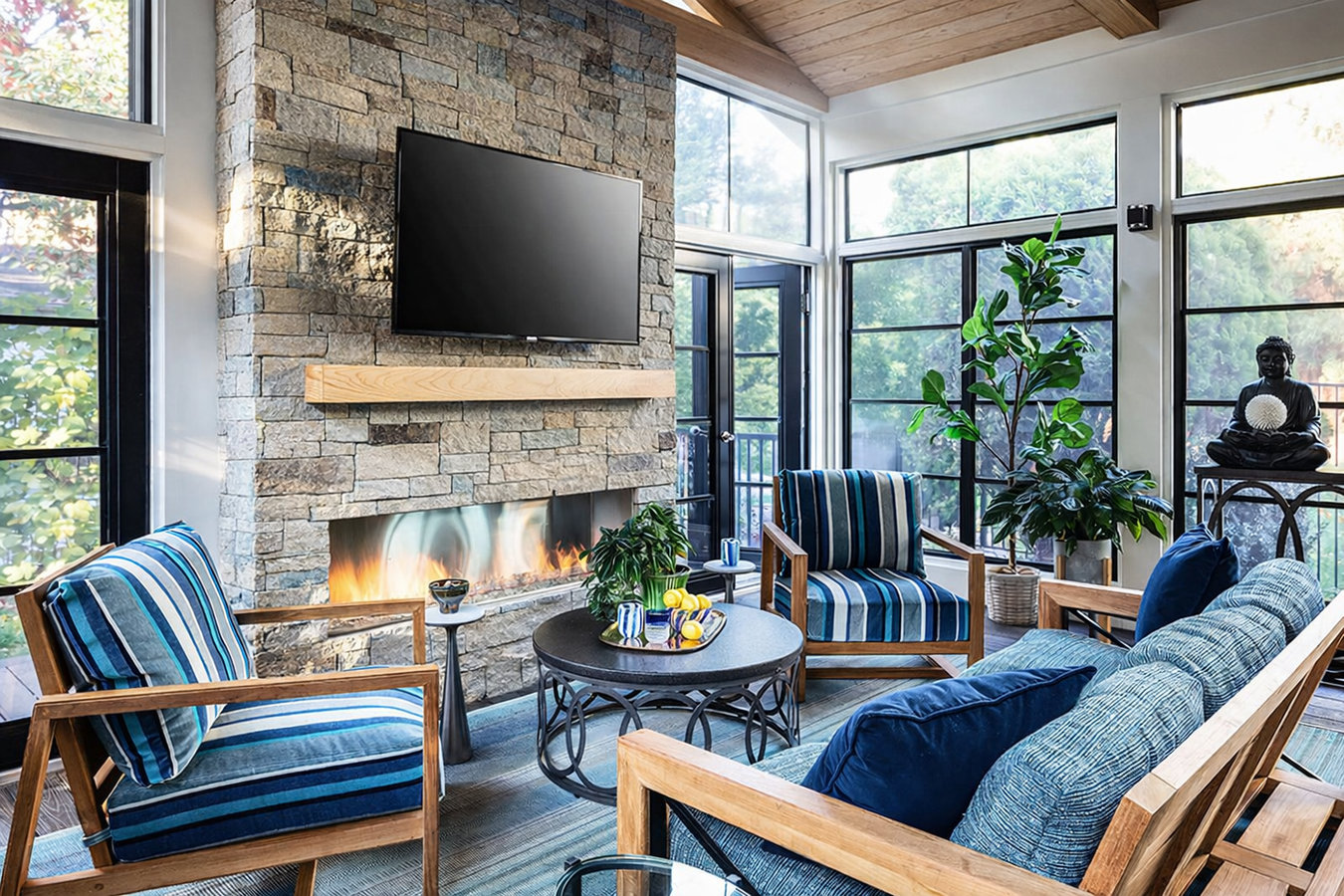
EnclosureWorks San Mateo Sunrooms builds all-season rooms, four-season sunrooms, and custom enclosures for Sunnyvale homeowners - we reply within 1 business day and handle all permits through the City of Sunnyvale Community Development Department.
EnclosureWorks San Mateo Sunrooms builds all-season rooms, four-season sunrooms, and custom enclosures for Sunnyvale homeowners - we reply within 1 business day and handle all permits through the City of Sunnyvale Community Development Department.
Sunnyvale homeowners deal with both dry, 90-degree summers and a wet winter rainy season that runs from November through March. An all season room is built to handle both extremes - giving you a comfortable, usable space regardless of what the weather is doing outside.
Sunnyvale summers regularly hit the mid-80s to low-90s, and winters bring the full rainy season with cool, damp mornings. A four-season sunroom with insulated glazing and a connected mini-split unit stays livable through both seasons - making it a true extension of your home rather than a room you only use six months a year.
Sunnyvale lots are typically compact - most single-family homes sit on 5,000 to 7,500 square feet of land. A sunroom addition is one of the most efficient ways to add livable square footage without expanding the footprint dramatically, which matters when you are working with a modest side yard or rear setback.
Many Sunnyvale ranch homes have original concrete patios in the backyard that go unused during the winter rains and get too hot in the afternoon during summer. Enclosing that existing patio with a screened or glass system converts dead space into a shaded, weather-protected area at a fraction of the cost of a full room addition.
Sunnyvale's housing stock ranges from 1950s ranch houses with low rooflines to newer townhomes along El Camino Real with different framing systems entirely. A custom sunroom is designed around your specific home's structure, roofline, and exterior finish so the addition integrates cleanly rather than looking like something bolted on.
Wildfire smoke arrives most falls in Sunnyvale, and a screened room provides outdoor living space that filters coarse ash and debris while still letting airflow through. It is also a good solution for homes near the creek trails and parks where insects are more active in the warmer months.
The bulk of Sunnyvale's housing stock was built between the 1950s and the early 1980s. These ranch-style homes are now 40 to 70 years old, and while they were solidly built for their time, many have original roofing, windows, and concrete flatwork that has been pushed past its useful life by decades of dry summer heat and winter rain cycles. Adding a sunroom to one of these homes requires a contractor who understands the existing structure - how the walls were framed, what the foundation looks like, and whether the original concrete slab can support the connection points for a room addition without cracking or settling.
Sunnyvale also sits on the same expansive clay soils that run through much of Santa Clara County. The USGS has documented the seasonal soil movement across the valley, and its effects on foundations and concrete flatwork are consistent in Sunnyvale neighborhoods. A sunroom addition that is not properly anchored to a reinforced footing will show the effects of that movement within a few wet-dry cycles - gap openings at the roof line, shifted door frames, and cracked threshold seals. Getting the foundation right at the start is far less expensive than fixing it after the fact.
Our crew works throughout Sunnyvale regularly, and we understand the local conditions that affect sunroom contractor work here. We pull permits through the City of Sunnyvale Community Development Department and know the plan check requirements and typical review timelines for room additions - so permitting does not stall your project.
Most of the homes we work on in Sunnyvale are the single-story ranch houses that line the streets between Mathilda Avenue and Wolfe Road - low-pitched roofs, stucco siding, attached garages, and modest rear yards. The work here is predictable once you know the era and construction type, and the compact lots mean we coordinate closely with homeowners on staging and material access. In the newer developments near the Caltrain station and along El Camino Real, the framing systems and exterior finishes are different, and we adjust the attachment and glazing approach accordingly.
We serve the cities that border Sunnyvale as well. Homeowners near the eastern boundary comparing notes with neighbors in San Jose will find that we work across that line regularly - the housing stock in west San Jose and eastern Sunnyvale shares a lot of the same characteristics. We also work north of here toward Palo Alto, where larger lots and more architecturally varied homes call for a different approach.
Call or submit a contact form and we reply within 1 business day. We schedule a site visit at a time that works for you - you do not need to take a day off; we work around your schedule.
We visit the property, review the existing structure and soil conditions, and discuss the options that fit your space and budget. The estimate covers everything - materials, labor, permits, and foundation work - so there are no surprises mid-project.
We submit and manage the permit application with the City of Sunnyvale. Once approved, the on-site crew handles all framing, glazing, and finish work. Most standard additions are complete in 4 to 6 weeks of on-site construction.
We schedule the city final inspection and walk through the completed room with you before we close out. You get all permit documents - which you will need when you refinance or sell - and a direct contact for any follow-up questions.
Sunnyvale homeowners get a free on-site assessment and written estimate. We handle permits with the City of Sunnyvale from start to finish.
(650) 581-3715Sunnyvale is a city of about 155,000 in the heart of Santa Clara County, sitting between Mountain View to the north and San Jose to the south. It is one of the core cities of Silicon Valley, home to major tech employers and a largely owner-occupied housing stock that reflects its postwar growth. The city is known for its walkable downtown around Murphy Avenue and the historic Heritage Park Museum, as well as its growing transit corridor near the Sunnyvale Caltrain station, where newer townhomes and mixed-use developments have been added in recent years. Most of the residential streets away from El Camino Real are quiet and tree-lined, with ranch houses set on modest lots.
The bulk of Sunnyvale's single-family homes were built between 1950 and 1985 - a postwar boom that produced a consistent style of single-story ranch construction with stucco siding, low-pitched roofs, and attached garages. These homes have aged well structurally but are at a point in their lifecycle where roofing, windows, insulation, and outdoor living spaces are due for updates. Homeowners here tend to stay long-term and invest in their properties accordingly. Neighboring cities we also serve include San Jose to the south and east, where the housing stock shares many of the same characteristics as western Sunnyvale.
Professional construction from foundation to finish for lasting quality.
Learn MoreKeep insects out while enjoying fresh air in a screened outdoor room.
Learn MoreTurn an underused deck into a weatherproof year-round living area.
Learn MoreFloor-to-ceiling glass solariums that flood your home with natural light.
Learn MoreCall us now or submit a request online - we respond within 1 business day and visit your Sunnyvale property at your convenience.